
Networks Beyond the Surface
Exploring The Vast Underground Infrastructure System
The National Utility and Pipeline Infrastructure Modern civilization depends on a vast network of infrastructure systems that operate quietly beneath our cities, roads, and communities. Most people rarely see these systems, yet they support nearly every aspect of daily life. Beneath the surface lies an interconnected set of underground networks that deliver energy, water, electricity, and information to homes, businesses, hospitals, and industries. These systems form the unseen framework that allows modern society to function.
Collectively, these networks account for millions of miles of buried infrastructure that stretch beneath streets, neighborhoods, industrial corridors, and transportation rights-of-way throughout the United States.
Common Engineering Principles
- Upstream production & Treatment
- Midstream Bulk Supply Transmission (High Voltage/High Pressure/High Capacity)
- Distribution (Lower Voltage and Pressure )
Despite serving different functions, these infrastructure systems are built upon similar engineering principles. Most begin at a source or production point, pass through treatment or processing facilities, traverse major transmission networks, and finally branch into smaller distribution systems that reach end users. For example, water is sourced from rivers, reservoirs, or aquifers, treated, and then moved through transmission pipelines into local distribution networks. Similarly, oil and natural gas are extracted, processed, transmitted, and distributed. Electrical power is generated at stations, carried through high-voltage transmission lines, and distributed via substations. Telecommunications rely on backbone networks and major hubs before branching into local service networks that reach homes and businesses.
Energy Production and Gathering Systems
 Oil and natural gas infrastructure starts with the extraction of resources from underground reservoirs through wells. These resources are then transported via flowlines and gathering pipelines that connect individual wells to central processing facilities. Gathering systems typically include wellhead flowlines, gathering pipelines, separation facilities, gas processing plants, and storage facilities.
Flowlines move raw oil, natural gas, and associated liquids from wells to gathering systems. Gathering pipelines then transport these products to treatment plants, processing facilities, storage terminals, or transmission pipelines. Steel pipe is most commonly used for these pipelines due to its strength and ability to withstand pressure and temperature changes. In environments where corrosion is a concern, materials like fiberglass reinforced pipe or polyethylene pipe may be used.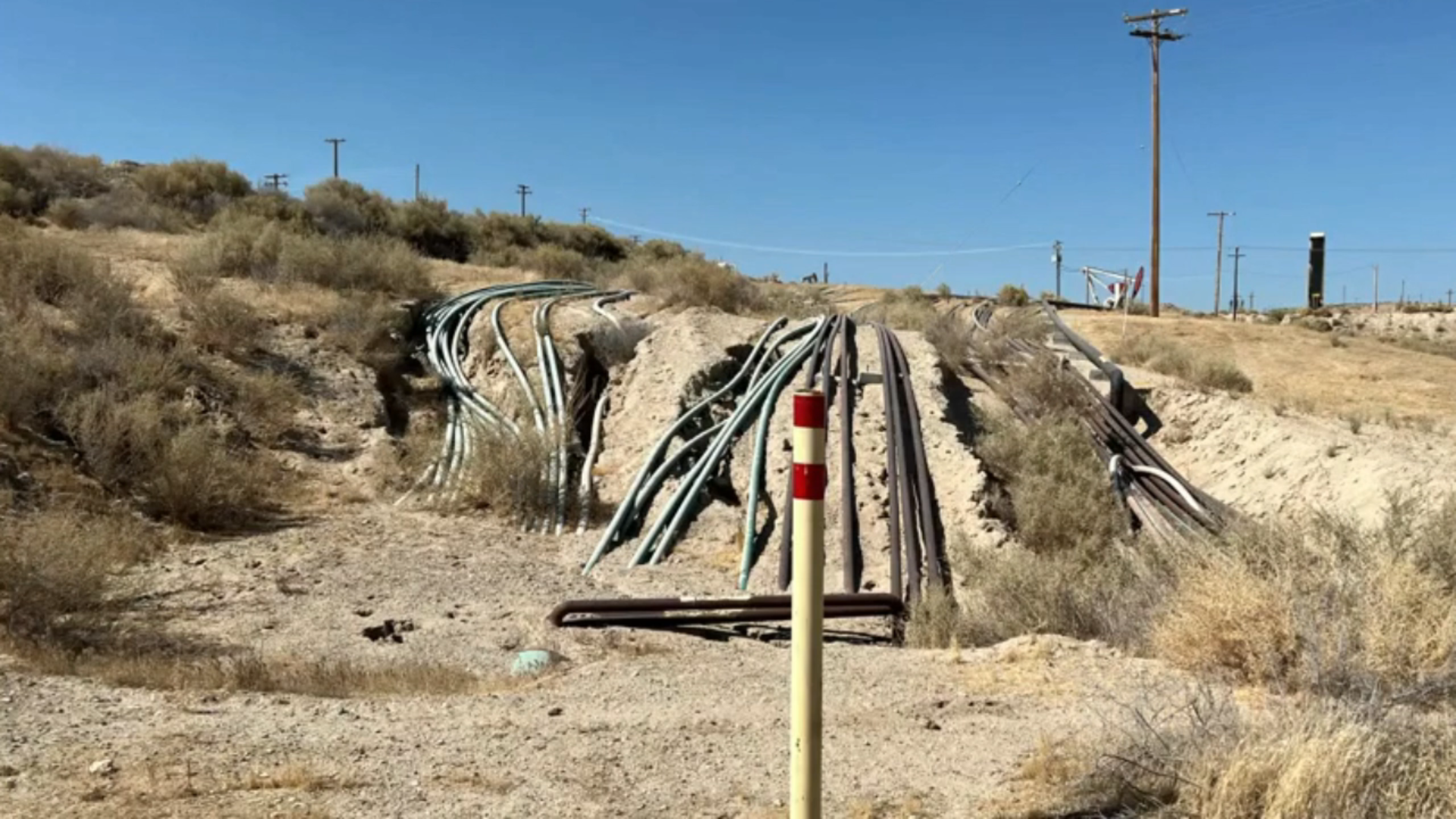 Electrical and communication cabling are often installed alongside production equipment to operate pumps, control valves, instrumentation, and monitoring systems across these fields. Once processed, oil and natural gas enter large transmission pipelines that carry these products across regions and between markets.
Transmission Pipelines
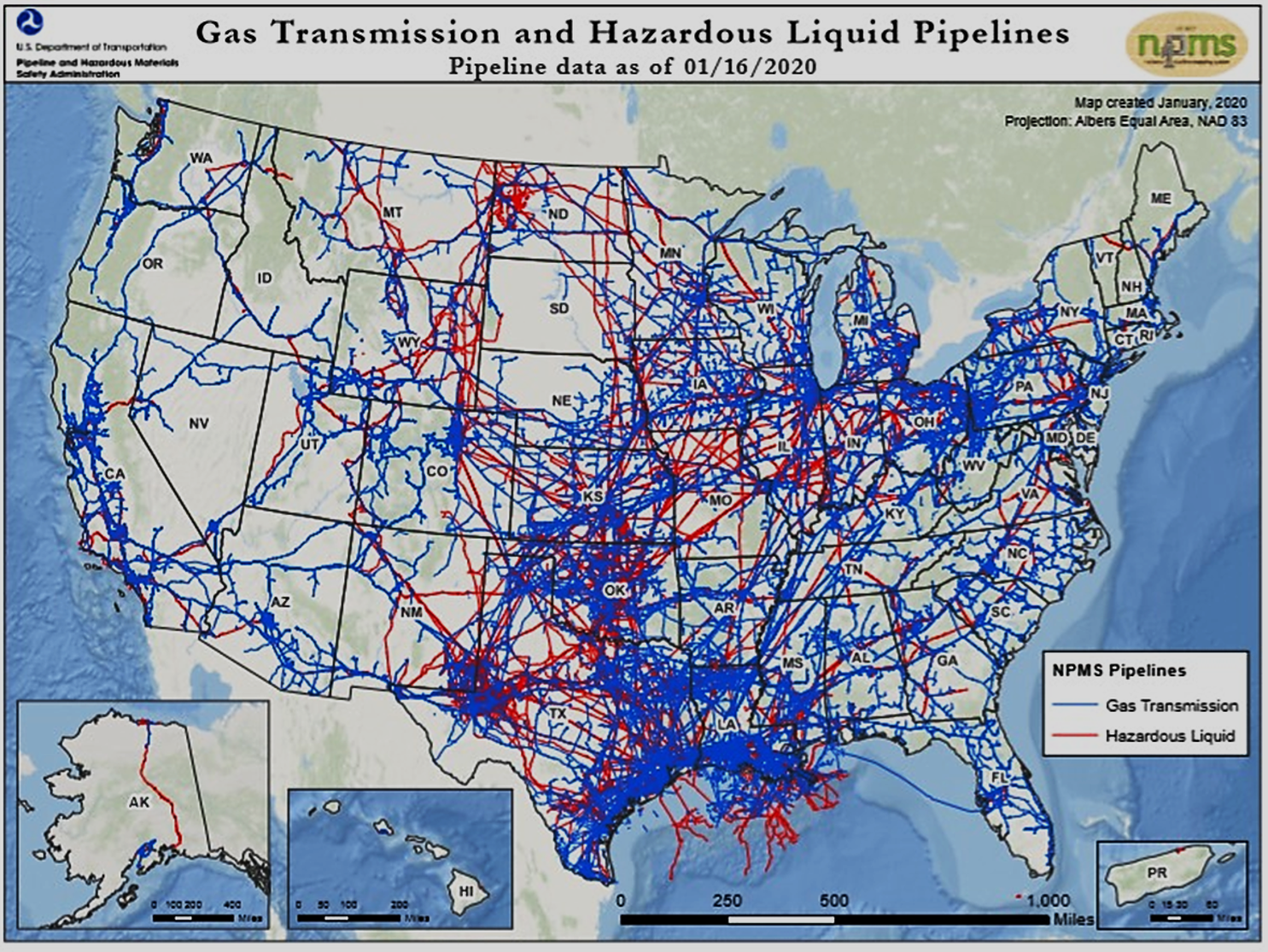 Transmission pipelines are the backbone of the energy transportation network. They move large volumes of crude oil, natural gas, and refined petroleum over long distances, linking producing regions, refineries, storage terminals, industrial centers, and major markets.
Constructed from coated carbon steel pipe, these pipelines operate at high pressures and are installed along dedicated rights-of-way, often spanning hundreds or thousands of miles. Supporting infrastructure includes compressor stations for natural gas, pump stations for liquids, valve stations, metering facilities, and storage terminals. These surface facilities often indicate the presence of underground pipelines.
Natural Gas Distribution Systems
After passing through transmission pipelines, natural gas enters local distribution systems that deliver gas to homes, businesses, and industrial facilities. These systems operate within cities and towns, consisting of pipeline networks that branch throughout neighborhoods and commercial areas.
Distribution systems typically start at city gate stations where gas moves from transmission 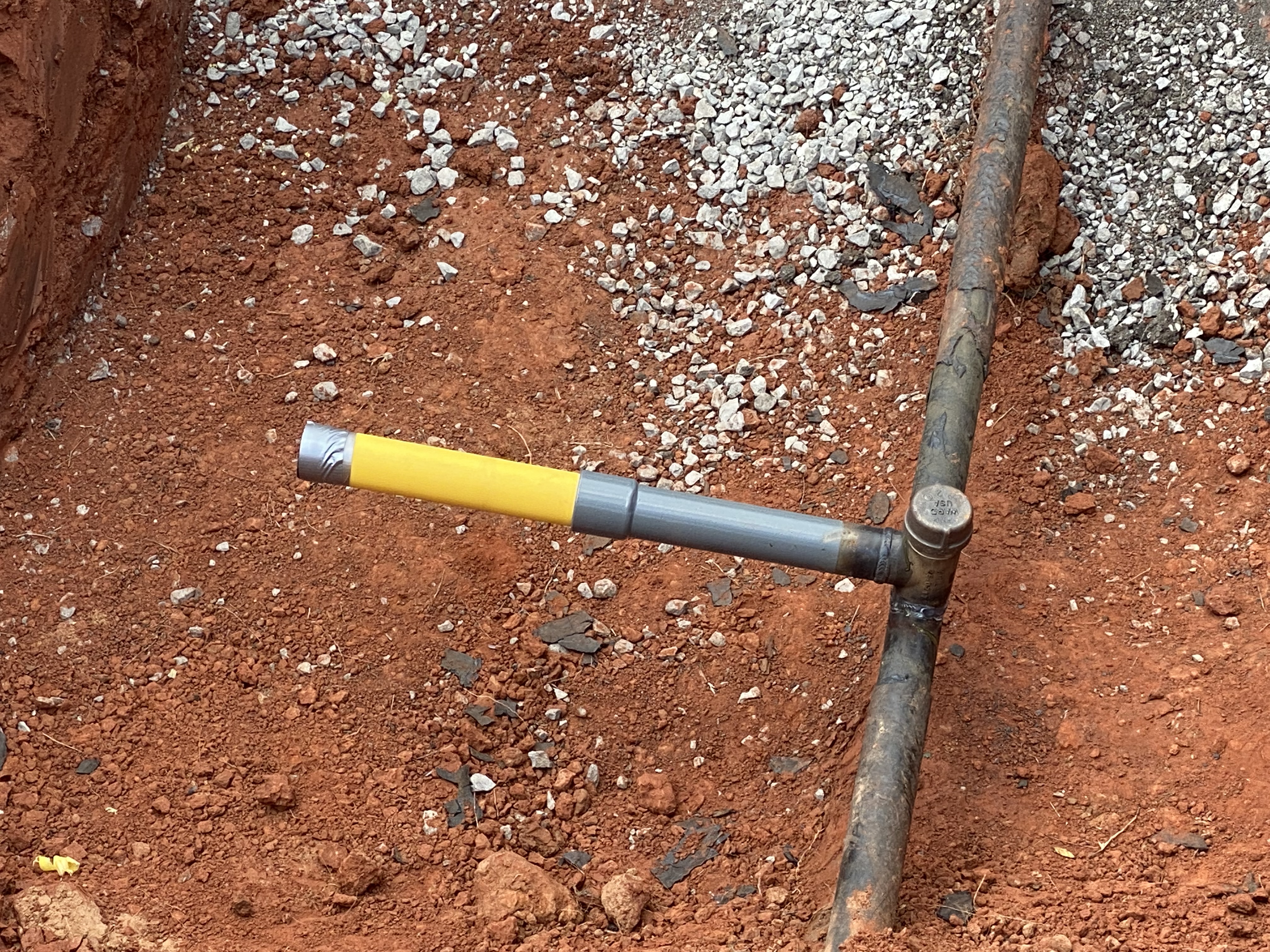 pipelines into local networks. Here, gas pressure is reduced and flow is measured before entering municipal systems. Distribution mains transport gas through communities, branching beneath streets and roadways. Service lines connect these mains to individual buildings and meters. Surface access points in these systems commonly include regulator stations, valve boxes, service shutoff valves, gas meters, and pressure control cabinets.
 Pipeline materials vary by pressure level and system age. Transmission pipelines are typically steel for strength and high-pressure operation.
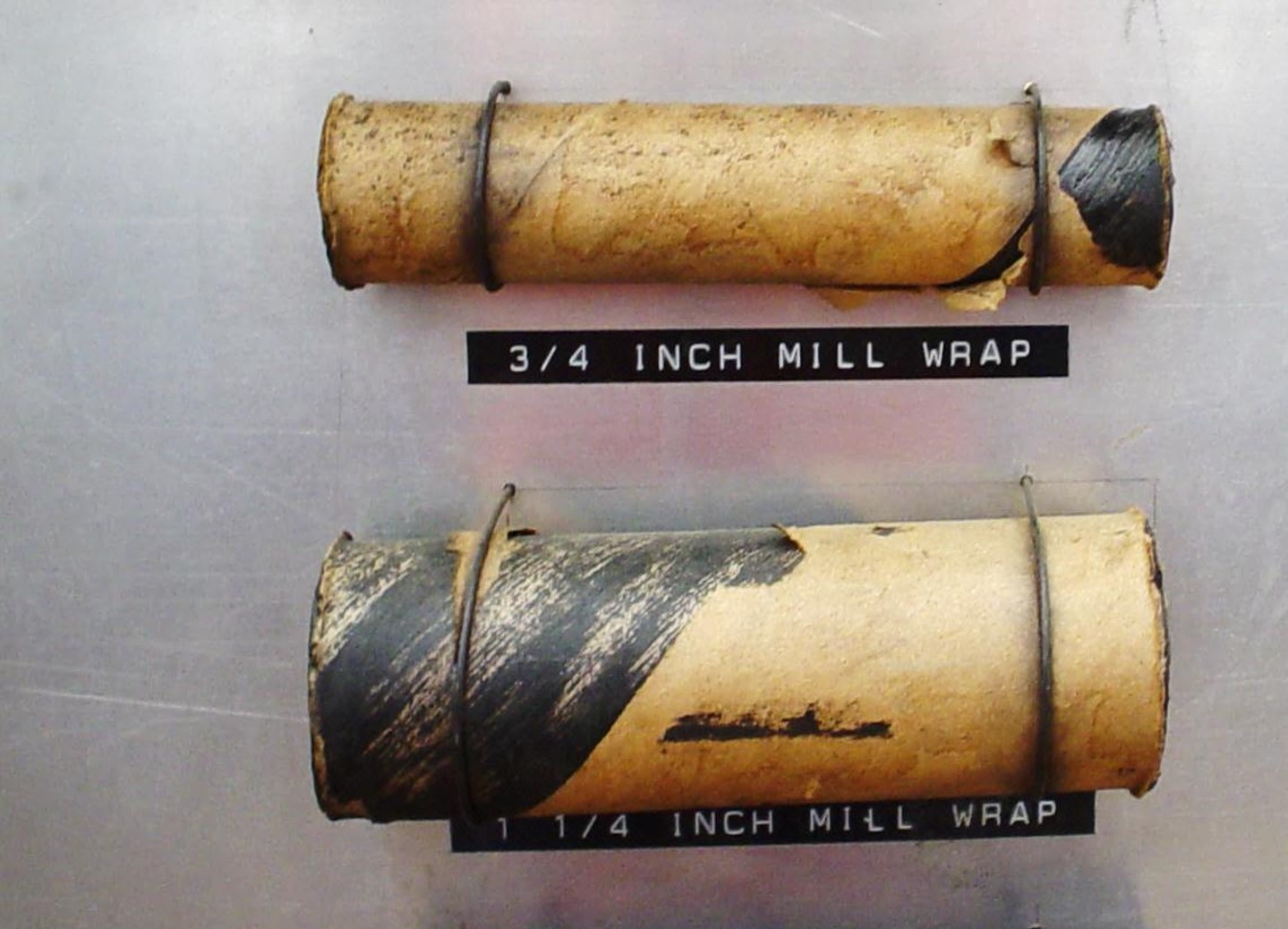
Distribution systems use steel, polyethylene plastic, and, in older systems, cast or wrought iron. Polyethylene plastic is widely used in modern systems for its flexibility, corrosion resistance, and ease of installation. As plastic pipes do not conduct electricity, tracer wire is typically installed to allow for future location of the system.
 Public Works Systems
Public works departments operate vast underground piping networks that provide drinking water, collect wastewater, and manage storm drainage. In the United States, public works infrastructure includes roughly 2.2 million miles of drinking water pipelines, 800,000 miles of sanitary sewers, and 3.5 million miles of storm drainage systems—about 6.5 million miles of buried public infrastructure in total.
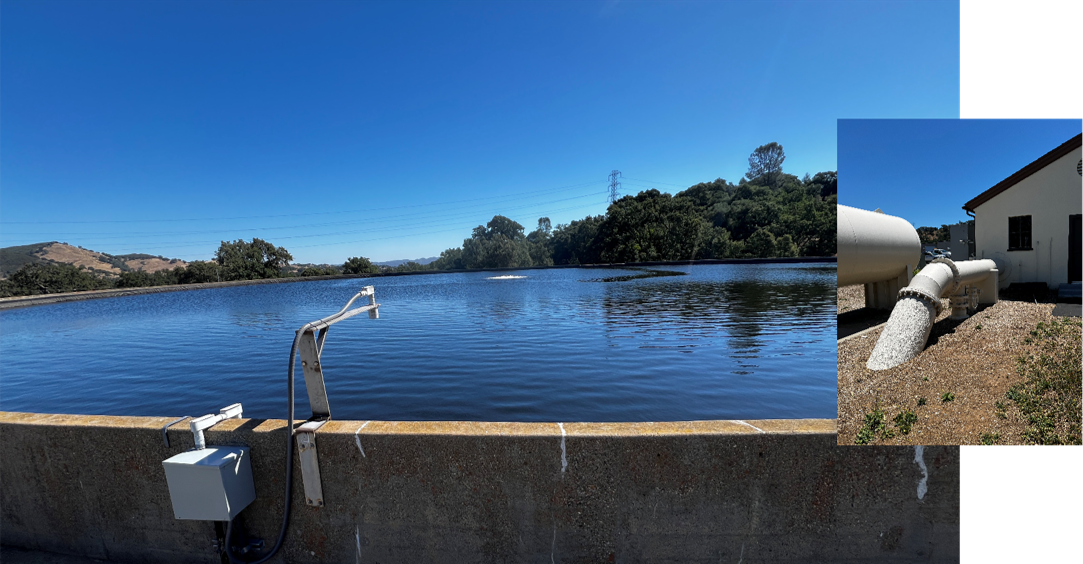 Like energy systems, these networks have both transmission and distribution components. Large transmission pipelines move water from sources to treatment plants and municipal systems; distribution systems deliver treated water to homes and businesses. Wastewater systems transport sewage to treatment plants, while storm drainage systems collect rainwater runoff and convey it to streams, rivers, or detention facilities.
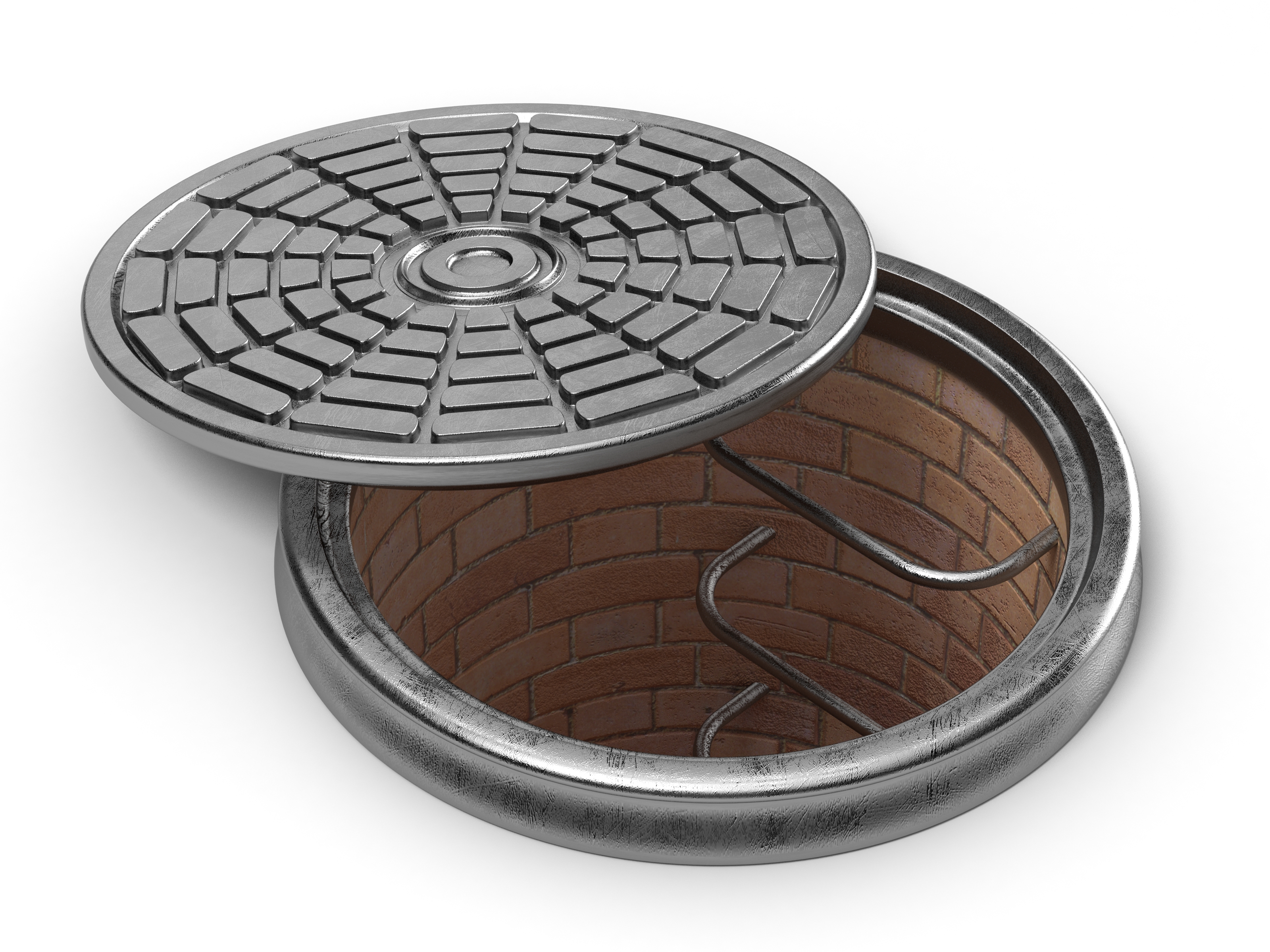
Surface access structures include fire hydrants, valve boxes, manholes, catch basins, and storm inlets.
Pipe Materials and Joint Styles
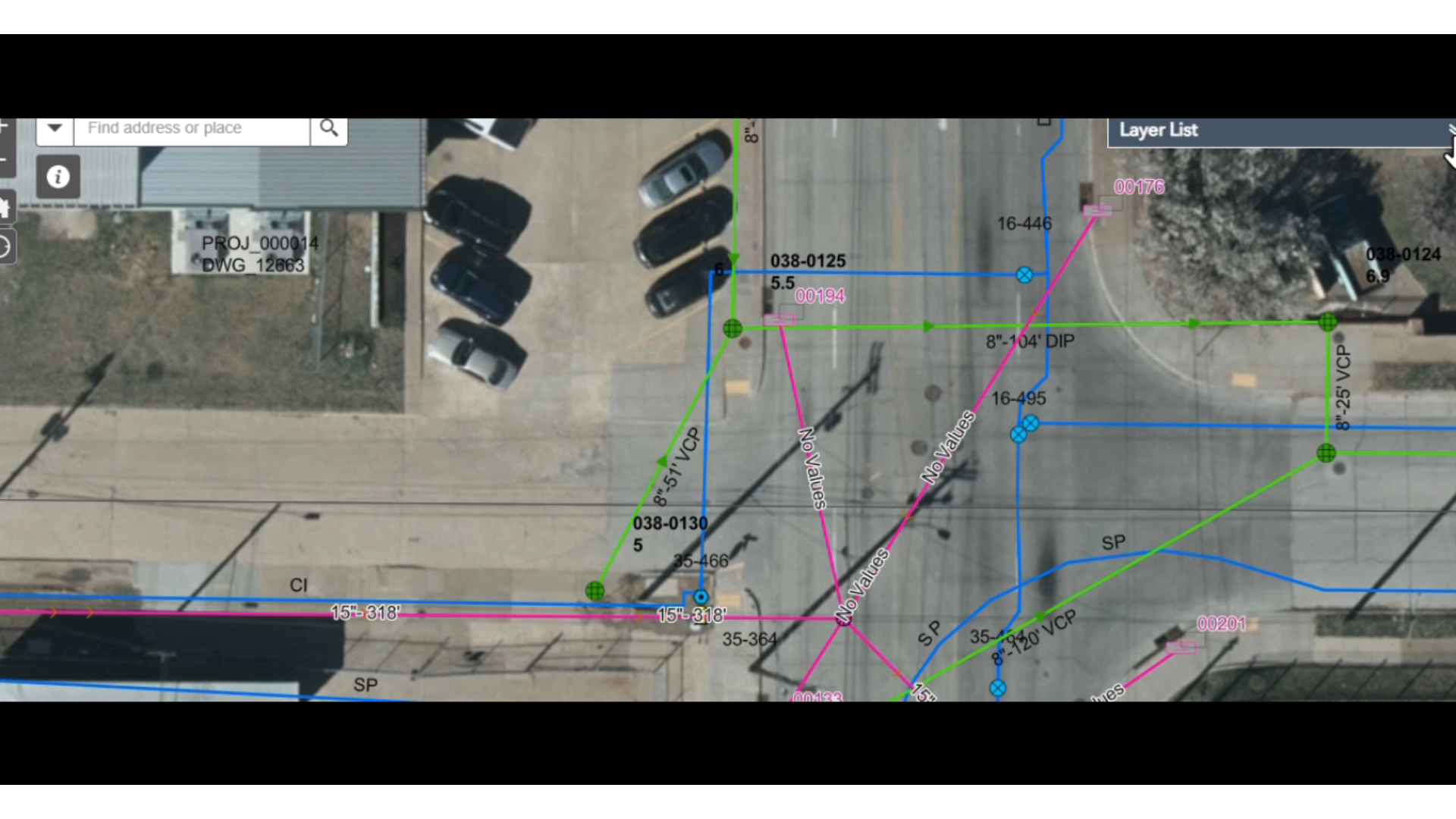 Public water, wastewater, and storm drainage systems are constructed from various materials, reflecting the era, standards, and operating conditions at the time of installation. For line locators, the key distinction is whether the pipe is conductive or non-conductive, and whether a conductive path exists for electromagnetic locating signals. Understanding pipe materials and joint styles helps locators choose the most effective locating method and improves their ability to identify infrastructure in the field.
In North America water mains are approximately 28% cast iron, 28% ductile iron, 22% PVC, 13% asbestos-cement, and smaller amounts of steel, HDPE, and concrete cylinder pipe. Cast iron and ductile iron together make up about half of the installed water mains, explaining why metallic water pipes are common in older systems.
Modern water systems often use PVC and HDPE for their advantages: light weight, corrosion resistance, smooth interiors, lower installation cost, and compatibility with trenchless construction methods. Ductile iron remains in use for high-pressure, large-diameter pipelines, or where strength is essential, resulting in modern systems containing both old metallic and new plastic pipes.
Much underground water infrastructure was installed during earlier periods of growth, with legacy materials like cast iron, ductile iron, asbestos-cement, vitrified clay, and concrete pipes still in use. Many were installed before tracer wire became standard, making them difficult to locate using electromagnetic signals.
Pipe materials fall into two groups for locating: conductive (steel, ductile iron, cast iron) and non-conductive (PVC, HDPE, asbestos-cement, clay, concrete). Conductive materials can carry locating signals when electrical continuity exists; non-conductive materials require tracer wire or other conductive elements to be detected electromagnetically.
Locators often encounter a range of materials. Water systems may include cast iron, ductile iron, PVC, HDPE, steel, and asbestos-cement. Sewer systems may use vitrified clay, PVC, concrete, ductile iron, or HDPE. Storm drainage systems often have reinforced concrete, HDPE, PVC, or corrugated metal pipes.
Joint styles offer clues about pipe material and installation era. Bell-and-spigot joints are common in cast iron, ductile iron, clay, and some concrete pipes. Older installations often used lead and oakum seals; modern systems use rubber gaskets. Push-on gasket joints are typical in ductile iron and PVC pipes, while mechanical joints are used with ductile iron fittings and valves. Sleeve couplings are seen with asbestos-cement or pipeline repairs, and HDPE uses fusion-welded joints, creating a continuous pipeline without mechanical joints.
Welded steel pipe and fusion-welded HDPE with tracer wire provide the most continuous conductive pathways for locating. Gasketed, mechanical, or corroded joints may add resistance that interrupts the locate circuit, weakening the electromagnetic field.
Modern installations usually include tracer wire with non-conductive pipes, installed attached, alongside, or above the pipe in the trench. The wire allows for the application of an electromagnetic locating signal.
Older non-metallic pipelines were often installed without tracer wire or locating aids. In such cases, the pipeline cannot carry a locating signal, so locators use alternative methods such as inserting a sonde, ground penetrating radar, identifying surface features, or reviewing system records. Knowledge of materials and installation practices informs the choice of locating method.
Electrical Power Cable Systems
The electrical power grid also follows a transmission and distribution model. Electricity is generated at power plants, transmitted via high-voltage lines to substations, and distributed locally to homes and businesses.
In urban areas, much of the electrical distribution is underground, using copper or aluminum conductors, insulated cables, conduit networks, transformers, and switching equipment.
Surface access includes pad-mounted transformers, switch cabinets, underground vaults, utility poles, electric meters, and service panels.
Electrical systems rely on grounding and bonding for stability and safety. Grounding occurs at equipment transitions, exposed metallic equipment, transformers, cable transitions, fuses, meters, and service panels. These systems provide a common reference and safely dissipate energy into the earth.
For locators, grounding and bonding are important because electrical systems offer multiple paths for locating signals. Ground rods, bonded or concentric neutrals, metallic sheaths, and interconnected grounding can influence how a locate signal behaves. The signal may return through grounding conductors, neutral systems, or other bonded metallic structures, making interpretation more complex than on a continuous steel pipeline. Nonetheless, underground electrical conductors and metallic components usually provide a very good path for electromagnetic locating when proper connection methods are used.
Telecommunications Networks
Telecommunications infrastructure also uses a transmission and distribution model. Long-distance backbone networks connect major cities and hubs, while local networks deliver services to end users.
This infrastructure includes fiber optic cables, coaxial cable systems, and legacy copper cables. Access points include handholes, splice vaults, pedestals, fiber cabinets, and manholes.
Legacy copper cables and coaxial shields are conductive and can be located electromagnetically. Fiber optic cable is non-conductive unless metallic armor, shielding, or tracer elements are present, making system records, tracer systems, and surface features important for locating.
Telecommunications grounding and bonding also affect locating. Metallic shields, bond wires, cabinets, and grounding can create multiple conductive paths, so signals may not stay on the intended cable if bonded paths are interconnected. Understanding the layout and connection points improves accuracy.
Private Utility Systems
Private underground utilities are utility systems that exist beyond the ownership or service responsibility of a public utility. In most cases, the point of ownership changes at a meter, service disconnect, property line, or another defined demarcation point established by the utility provider. Private utilities extend from that point into a residential, commercial, industrial, or institutional property. These private systems and associated equipment are typically owned and maintained by the property owner and are typically not marked by public utility operators when an 811 excavation notification is submitted.
These systems often include electrical distribution, natural gas piping, water and irrigation systems, sanitary sewer laterals, storm drainage, telecommunications, site lighting, fire protection systems, and a variety of privately installed process or facility-specific utilities. From a buried propane pipe to an electric dog fence, private utilities can be located beneath utility easements.
Private utilities are installed for the same reasons as public utilities: to deliver essential services where they are needed. The difference is ownership, not function. A private electrical feeder carries electricity just as a public distribution cable does. A private water service delivers water in the same manner as a municipal water main. Once these facilities are buried, they become part of the underground infrastructure serving that property and may remain in service for decades. As buildings are expanded, remodeled, or repurposed, additional private utilities are often added while older systems are abandoned in place, creating layers of active and inactive infrastructure beneath a single property.
Unlike public utility systems, private utilities are frequently absent from one-call locating requests because they are generally outside the responsibility of public utility owners. Property owners may have construction drawings, as-built records, or maintenance documentation, but the accuracy and availability of those records can vary considerably. Many private utilities have been modified over many years by different contractors, and documentation is not always updated to reflect those changes. For this reason, excavating on private property often requires additional planning, investigation, and the use of qualified private utility locating services. Understanding where public ownership ends and private ownership begins is essential for safe excavation
Abandoned Pipes, Cables and Conduits
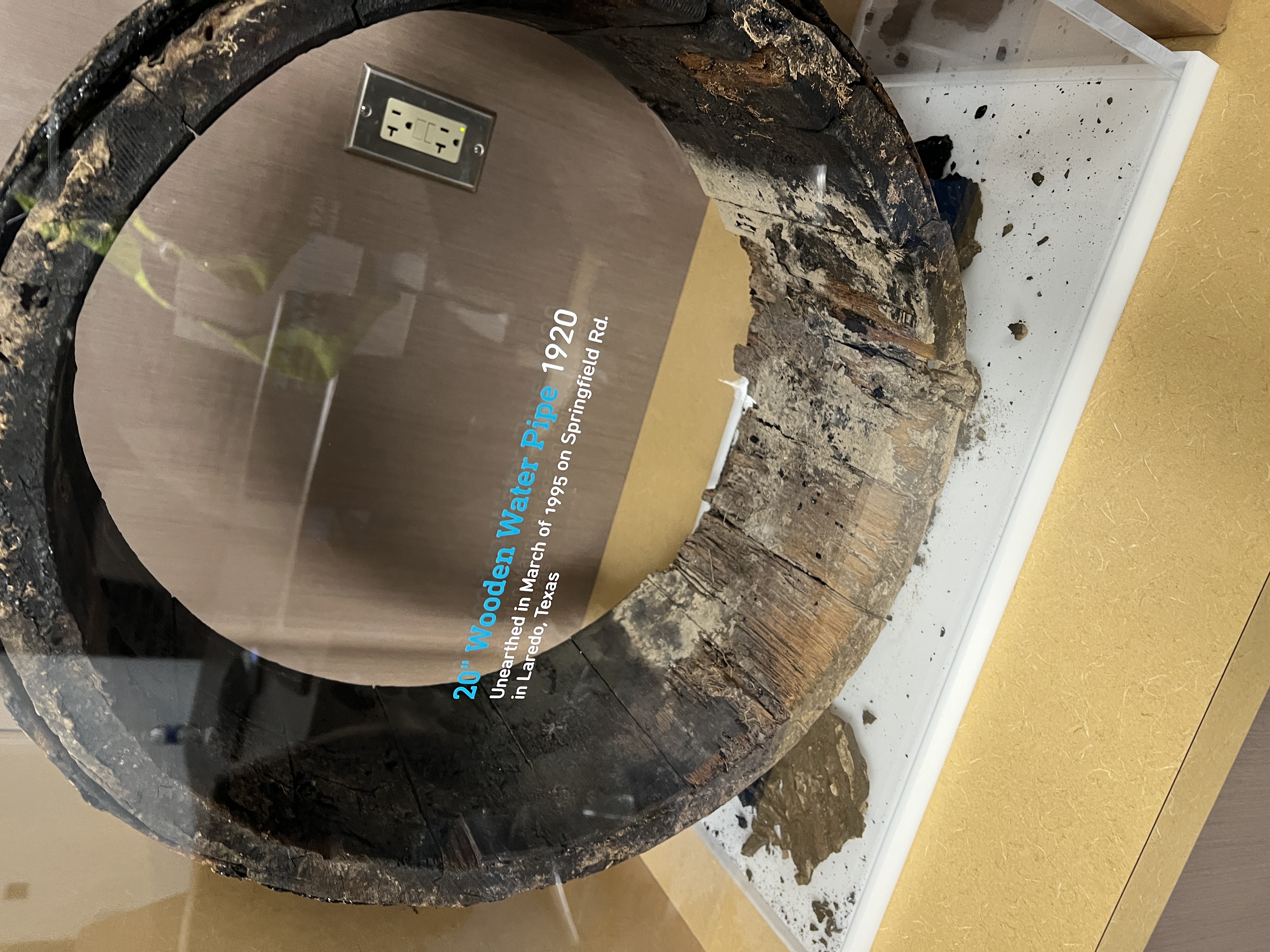 Abandoned underground utilities are a normal consequence of how infrastructure evolves over time. As communities grow, utilities are expanded, upgraded, relocated, or replaced to meet increasing demand, improve reliability, or accommodate new construction. Water mains are upsized, gas distribution systems are modernized, electrical and telecommunications networks are rebuilt, and industrial facilities change ownership or cease operation. In many cases, the original pipe, cable, or conduit is disconnected from service and left in the ground because removing it would be significantly more expensive, disruptive, or hazardous than abandoning it in place. As a result, every generation of construction leaves behind portions of previous underground infrastructure.
An abandoned utility is simply a pipe, cable, conduit, or other underground facility that is no longer intended to provide service but remains buried. Although it no longer performs its original function, it continues to occupy physical space beneath the surface. Depending on its material, it may still be detectable with electromagnetic locating equipment, visible on historical records, or encountered during excavation. In many corridors, abandoned facilities exist alongside active infrastructure, creating multiple generations of utilities within the same right-of-way. This accumulation is especially common in older urban areas where decades of construction have repeatedly reused the same underground corridors.
The presence of abandoned utilities is not, by itself, a problem. The challenge is that many of these facilities were never accurately documented when they were taken out of service, and some have been forgotten entirely. As records become outdated and experienced personnel retire, knowledge of these abandoned facilities is gradually lost. Future excavators and utility locators may encounter pipes or cables that have no identifiable owner, are absent from current maps, and cannot be readily classified as active or abandoned. This uncertainty increases excavation risk, delays construction, and reduces confidence in the accuracy of underground infrastructure records. Continuous documentation of abandoned facilities when they are exposed offers an opportunity to improve those records for the benefit of every future excavation.
Beneath Our Communities
Together, energy pipelines, natural gas systems, public water infrastructure, electrical power cables, and telecommunications networks form the hidden framework that supports modern communities. These systems span approximately 30 million miles beneath our public and private properties and easements.
Although each utility system serves a unique purpose, they share common patterns in production, transmission, distribution. Surface access, grounding, and material limitations impact how they can be located. Understanding these aspects is essential for anyone working around underground infrastructure.
Accurate locating and protection of these systems is crucial for maintaining safe, reliable utility services. Modern locators must not only operate equipment correctly, but also understand the engineering and construction characteristics of the infrastructure they are locating.
Implications for Line Locators
For line locators, the key distinction is whether a system can carry an electromagnetic locating signal. Conductive systems include steel, ductile iron, and cast iron pipelines, copper communication cables, coaxial shields, electrical conductors, tracer wires, and metallic bond paths. Non-conductive systems include plastic water and gas pipes, clay, concrete, asbestos-cement pipes, and fiber optic cable without metallic components.
Non-conductive infrastructure is often installed with tracer wire or metallic detection elements. However, many older systems predate this practice, requiring locators to use indirect evidence, supplemental technologies, records, or selective exposure to identify these networks.
Exploring the History of Vital Infrastructures.pdf